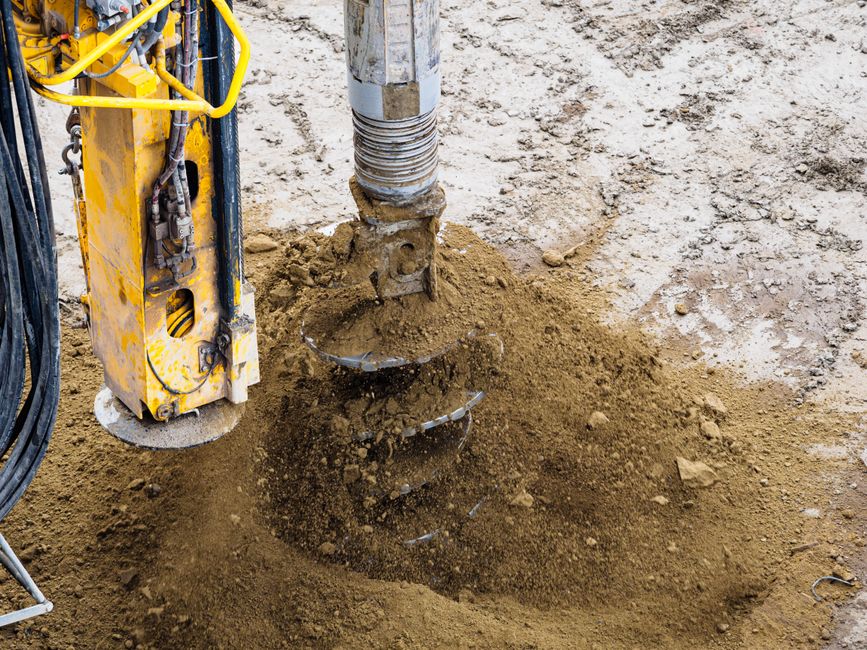
The drills at White and Centre Streets in Chinatown now run well into the night, and a coalition of neighbors and community groups is asking a court to make them stop.
The group filed suit Wednesday in Manhattan Supreme Court against the Mamdani administration, seeking to end after-hours work at the site of the borough’s forthcoming 335-foot-tall jail, according to Curbed. The plaintiffs include residents, the business-boosting nonprofit Welcome to Chinatown, and the advocacy group Neighbors United Below Canal, which was co-founded by Councilmember Christopher Marte.
According to an advisory the city published earlier this month, work and operations on White Street will now run from at least 6 a.m. through midnight on weekdays. Deliveries are scheduled from 4 a.m. to 7 a.m., and crews will also work daytime hours on Saturdays. The design-build team, Tutor Perini and O&G Industries, has installed dust and noise monitors, sound blankets and noise barriers to soften the impact, Curbed reported.
Plaintiffs say it isn’t enough. Jon Alpert, a 77-year-old documentarian who lives at 87 Lafayette Street, said in an affidavit that the only quiet he gets is the four hours between midnight and 4 a.m. He is recovering from treatment for metastatic prostate cancer. His nonprofit media-arts center, DCTV, is in the same building, and the suit says its evening screenings, classes and audio-recording services have become unworkable. Other plaintiffs describe floodlit apartments and shaking floors. Per the complaint, 88-year-old Ping Ai Mei, who lives at the low-income senior facility Chung Pak next to the site, claims health problems from demolition dust.
The schedule is driven by a deadline. The 1,040-bed Manhattan jail is one of four borough-based facilities meant to replace Rikers Island, and the city is all but certain to miss the legally mandated 2027 closure date. Curbed reports the Manhattan site looks to be the last of the four, with a target opening of 2032. According to the suit, the city has said a largely weekday, normal-hours schedule would push completion to 2034 and add $340 million to the project’s estimated $3.9 billion cost.
The lawsuit calls the 2032 target “arbitrary” and argues the city is placing an “excessive burden” on the neighborhood to meet it. It makes two legal claims. First, it alleges that building a jail does not meet the test for extended after-hours work, which is allowed only for projects such as those in the interest of public health and safety. Second, it alleges a violation of state environmental law, arguing the current plan more than doubles the intensity and duration of construction studied in the jail’s environmental-impact review, with no further review since.
“They’re already going to miss the legal deadline by five years. That doesn’t mean that Chinatown should have to suffer,” said Vic Lee, a co-founder of Welcome to Chinatown. Marte contrasted the project with routine utility work. “This is pretty much permanent,” he said.
For Lower Manhattan businesses and building owners, the case is a test of how far the city can push a megaproject schedule against the quality-of-life limits of a dense, mixed-use neighborhood. Some of the plaintiffs have already tried and failed to block the jail’s construction through the courts, Curbed noted. This new suit targets the schedule rather than the project itself.
Frequently Asked Questions
Why are Chinatown residents suing over the Manhattan jail construction?
Residents, businesses, and advocacy groups argue that the extended after-hours construction schedule at the White and Centre Streets site is illegal and harmful to the neighborhood. The suit also claims the city violated state environmental law by more than doubling the construction intensity and duration studied in its environmental review.
What hours is construction allowed at the White Street jail site?
According to the city’s advisory, work at the White Street site runs from at least 6 a.m. through midnight on weekdays. Deliveries are scheduled from 4 a.m. to 7 a.m., and crews also work daytime hours on Saturdays.
How big is the planned Manhattan jail in Chinatown?
The planned Manhattan jail will be 335 feet tall and hold 1,040 beds. Its estimated cost is $3.9 billion.
Why does the city want to keep construction running late at night?
The city says a normal-hours schedule would delay completion of the jail from 2032 to 2034 and add $340 million to the project’s cost. The jail is meant to replace Rikers Island, which the city is all but certain to miss its legally mandated 2027 closure date for.
Who filed the lawsuit against the Chinatown jail construction?
Plaintiffs include residents such as documentarian Jon Alpert, the business-boosting nonprofit Welcome to Chinatown, and the advocacy group Neighbors United Below Canal, which was co-founded by Councilmember Christopher Marte. The suit was filed in Manhattan Supreme Court against the city.

Leave a Comment