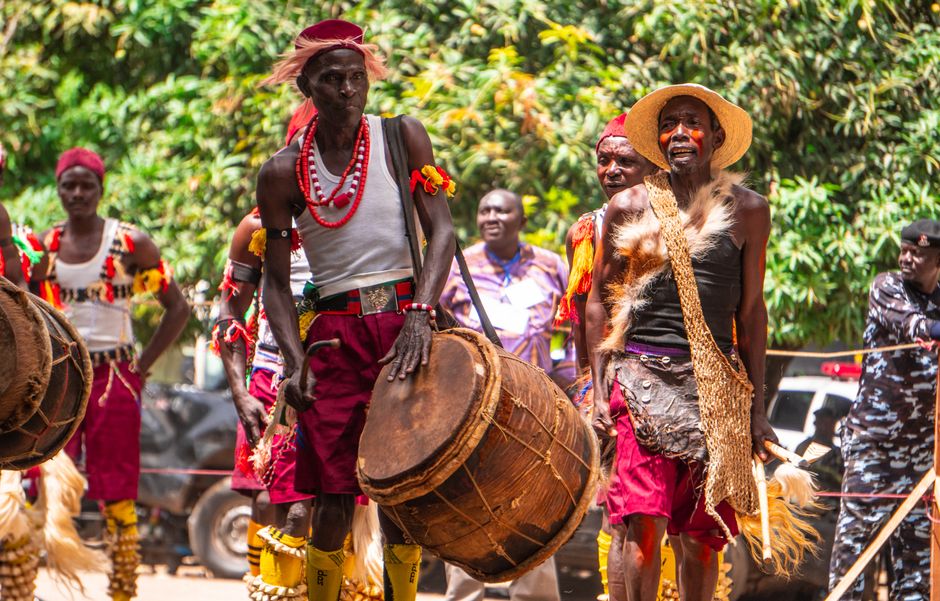
Drumming, singing and dance competitions filled the LeFrak Center in Prospect Park as Indigenous dancers, artists and musicians gathered for a Lenape powwow, according to a photo essay published by Curbed. The Look Book feature, which profiled attendees one by one, offers a close look at who traveled to Brooklyn and why the tradition still matters.
The crowd came from well beyond the five boroughs. Curbed’s profiles include participants from Cedarville, Bridgeton and Millville in New Jersey, from Marty, South Dakota, from Bowler, Wisconsin, from Douglas and Boston in Massachusetts, and from Manawan, Canada. Local attendees included a museum president from Southampton, a communications coordinator from Bushwick and a consultant from East New York. Many of those profiled were children and teenagers, from a kindergartner to twelfth-graders, a sign of how the event doubles as a space for passing tradition to younger generations.
Regalia drew much of the attention. Cory Ridgeway, a program specialist from Cedarville, told Curbed that the floral work on his outfit often signals that the wearer comes from a woodland area. The ribbon work down the front, he said, is very traditional for Lenape people, though dancers also use contemporary fabrics and designs. Another dancer, Mathyias Ellis, a twelfth-grader from Bridgeton, described his outfit and style as a prairie chicken. The dance, he told the outlet, resembles a rooster trying to win attention during mating season, with flashy moves.
Several attendees spoke to the weight of the history behind the gathering. Kiara Tanta-Quidgeon, an Indigenous-health researcher from Boston, told Curbed the powwow is an active revitalization for Native communities. She noted that colonial governments once legally prohibited Indigenous dances, and called it beautiful that people are still dancing after hundreds of years of suppression.
Janianyakuha Webster, a cultural keeper from Bowler, Wisconsin, described how that suppression echoes in families today. She told Curbed that for many years her relatives could not speak their language openly, and that her great-grandparents would talk in the basement while keeping the children upstairs. Many people now, she said, are working to break cycles rooted in generational trauma.
For George Stonefish, a consultant from East New York, the city itself shaped his path between worlds. He told Curbed he grew up on 82nd Street and spent summers with his grandmother in Canada, where he learned about powwows and ceremonies. That upbringing, he said, taught him to move comfortably between very different settings.
The feature captures an event that is cultural first and commercial only in the margins, but it also places Lenape presence squarely in one of Brooklyn’s most visited public spaces. Curbed’s account does not give attendance figures, organizers or a date, so the scale of the gathering remains unclear. What the profiles do show is a cross-generational, multi-state community using a city park to dance, compete and keep traditions visible.
Frequently Asked Questions
Where was the Lenape powwow held?
The Lenape powwow took place at the LeFrak Center in Prospect Park, Brooklyn. It was profiled by Curbed in a Look Book photo essay.
What happens at a Lenape powwow?
According to the article, the event features drumming, singing, and dance competitions. Indigenous dancers, artists, and musicians gather to take part in the tradition.
Where did attendees of the Lenape powwow come from?
Attendees came from New Jersey (Cedarville, Bridgeton, Millville), South Dakota (Marty), Wisconsin (Bowler), Massachusetts (Douglas and Boston), and Manawan, Canada. Local attendees also came from Southampton, Bushwick, and East New York.
What does the floral regalia at a Lenape powwow signify?
Cory Ridgeway of Cedarville told Curbed that floral work on regalia often signals that the wearer comes from a woodland area. He added that ribbon work down the front is very traditional for Lenape people.
Why does the Lenape powwow matter to Indigenous communities?
Kiara Tanta-Quidgeon, an Indigenous-health researcher from Boston, described the powwow as an active revitalization for Native communities after colonial governments once legally prohibited Indigenous dances. The article also notes that many participants were children and teenagers, showing how the event passes traditions to younger generations.

Leave a Comment